Font support
ADX formats all the fonts of the rest of the Atfinity platform.
List of supported fonts
| Font name | Used font file (if different) | Names to use in ADX |
|---|---|---|
| Aptos (new in 14.1) | aptos |
|
| Arial | Liberation Sans | arial |
| Courier New | Cousine | courier |
| Franklin (new in 14.1) | Libre Franklin | franklin |
| Helvetica | Nimbus Sans L | helvetica |
| IBM Plex Sans (new in 14.1) | ibmplex |
|
| Lato (new in 14.1) | lato |
|
| Montserrat | montserrat |
|
| Open Sans (new in 14.1) | opensans |
|
| Times New Roman | Liberation Serif | times |
| Verdana | DejaVu Sans | verdana |
| Work Sans | work |
Example
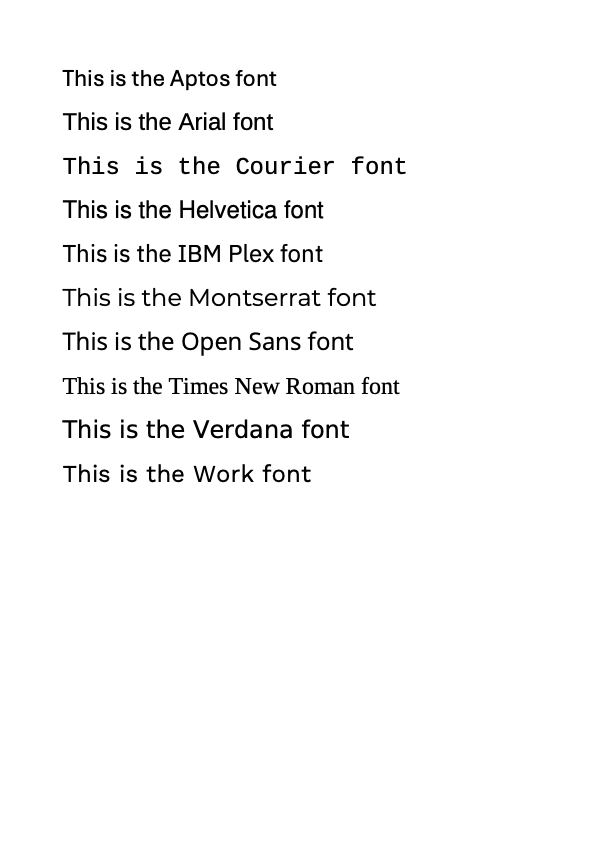
This ADX document generates text in all supported fonts:
<adx>
  <styles>
    <style
      name='aptos'
      font='Aptos'
      fontSize='24'
    />
    <style
      name='arial'
      font='Arial'
      fontSize='24'
    />
    <style
      name='courier'
      font='Courier'
      fontSize='24'
    />
    <style
      name='helvetica'
      font='Helvetica'
      fontSize='24'
    />
    <style
      name='ibm_plex'
      font='IbmPlex'
      fontSize='24'
    />
    <style
      name='montserrat'
      font='Montserrat'
      fontSize='24'
    />
    <style
      name='opensans'
      font='Opensans'
      fontSize='24'
    />
    <style
      name='times'
      font='Times'
      fontSize='24'
    />
    <style
      name='verdana'
      font='Verdana'
      fontSize='24'
    />
    <style
      name='work'
      font='Work'
      fontSize='24'
    />
  </styles>
  <body>
    <text class="aptos" spaceAfter="20">This is the Aptos font</text>
    <text class="arial" spaceAfter="20">This is the Arial font</text>
    <text class="courier" spaceAfter="20">This is the Courier font</text>
    <text class="helvetica" spaceAfter="20">This is the Helvetica font</text>
    <text class="ibm_plex" spaceAfter="20">This is the IBM Plex font</text>
    <text class="montserrat" spaceAfter="20">This is the Montserrat font</text>
    <text class="opensans" spaceAfter="20">This is the Open Sans font</text>
    <text class="times" spaceAfter="20">This is the Times New Roman font</text>
    <text class="verdana" spaceAfter="20">This is the Verdana font</text>
    <text class="work" spaceAfter="20">This is the Work font</text>
  </body>
</adx>
The result looks like this: